
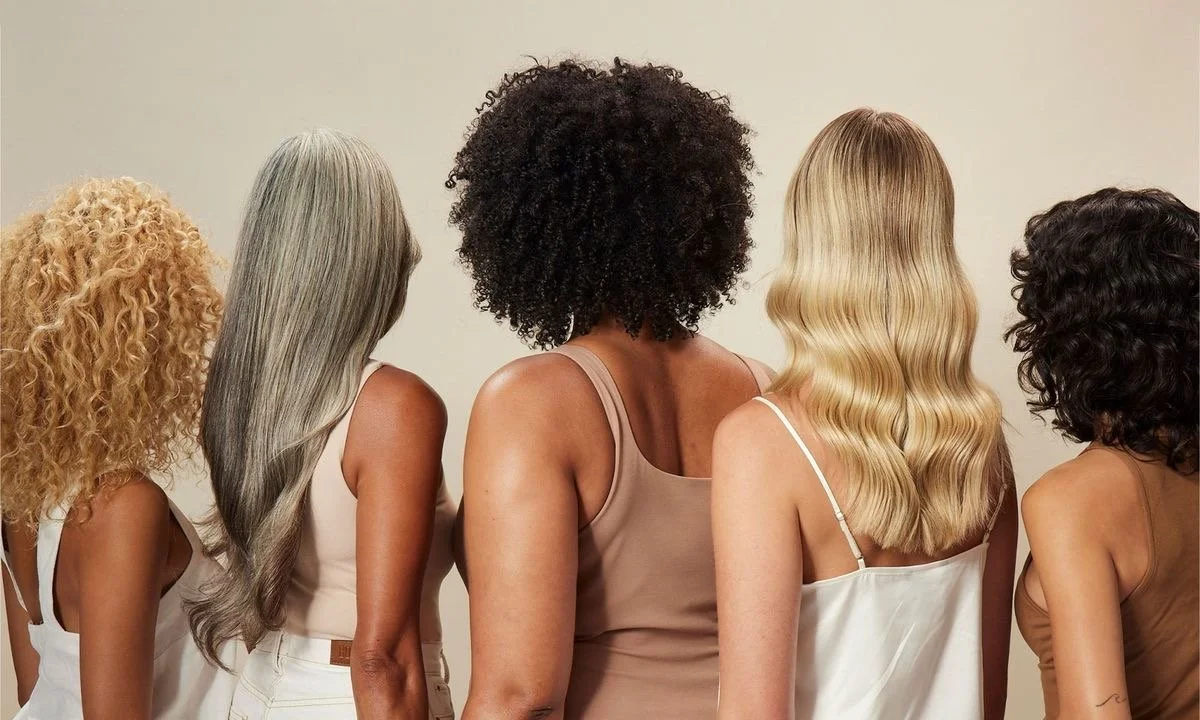
Whats Your Curl Type?
Coily
𖦹
Curly
ꕀ
Wavy
𖦹
Straight
ꕀ
Coily 𖦹 Curly ꕀ Wavy 𖦹 Straight ꕀ
Understanding hair types
Curly
Straight
Wavy
Coily
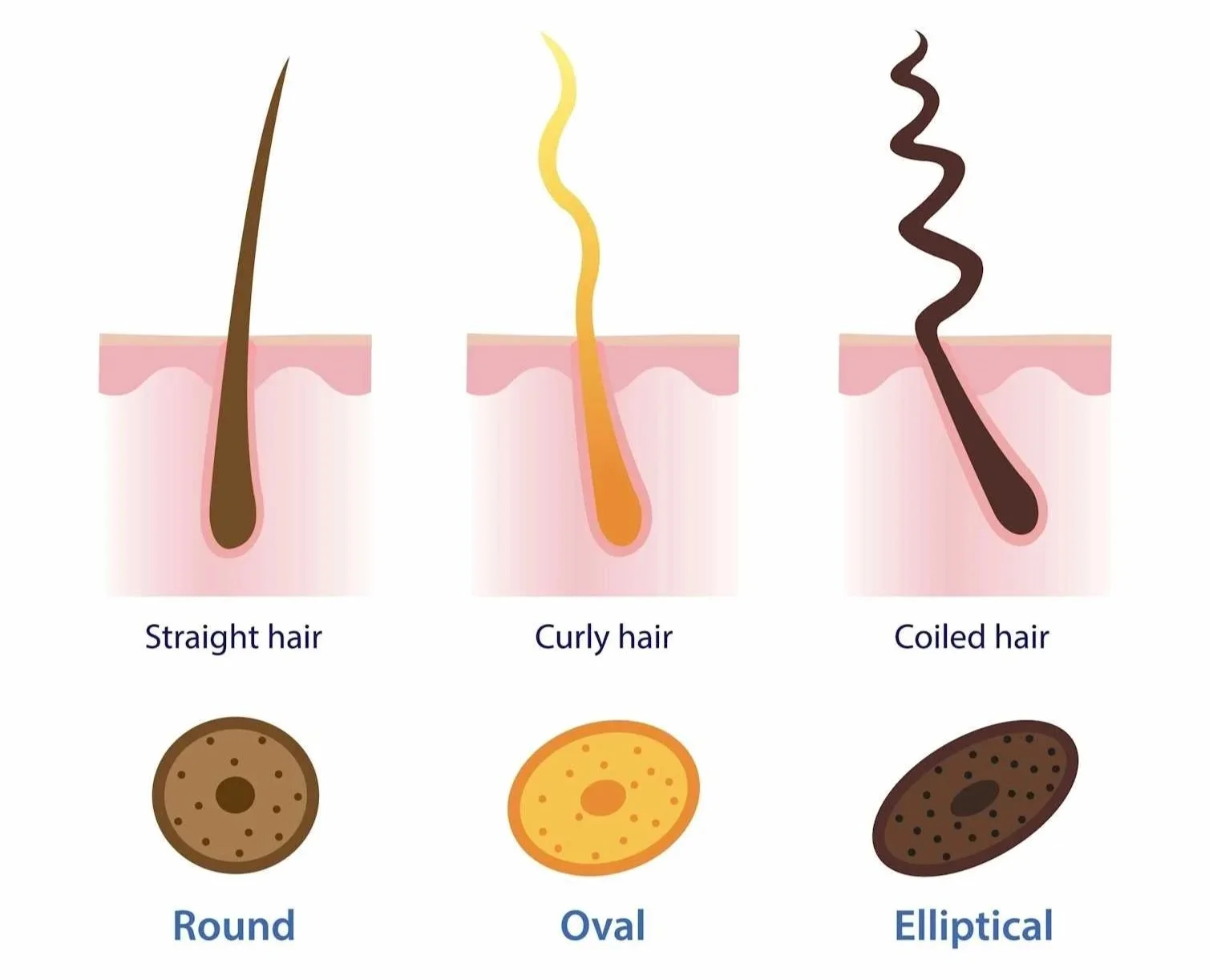
Your hair type is primarily based on your hairs curl pattern. The number of curls in your hair are determined by your hair follicle and that determines whether your hair is straight, wavy, curly or coily.
Before we look at what types of hair you have, let’s understand your scalp type. Not all scalps are the same and scalp types differ from person to person, maybe even from day to day.
FUN FACT:
Did you know, that the more oval or asymmetrical your follicle is, the curlier your hair will be?
Scalp Types
-
If your hair clumps together, is flat against your head, or is remarkably greasy within the day then you fall into this catagory. An oily scalp is generally caused by overactive sebaceous glands producing excess oil or “sebum” often triggered by genetics, hormonal shifts (puberty, stress, pregnancy), or improper hair care habits like over-washing and also under-washing. I always recommend to those with oily scalps, to only wash their hair 2 times a week maximium and when you do, to “double wash”. To “Double -wash” first start with a clarifying shampoo and then shampoo again with a gentle shampoo or moisturizing shampoo. then follow with conditioner, but avoid getting conditioner right on the scalp, only focus on the mid-lengths and ends of your hair. Dry shampoo can come in handy for in-between washes. My favorite is K18 Airwash.
-
It you experience itchy scalp with regular dusting of dry powdery flecks, then dry scalp might be the culprit. Dry scalp occurs when skin lacks moisture, causing itchy, white, and fine flakes. Common causes include cold/dry weather, harsh hair products/shampoos, over-washing, and reduced oil production with age. Effective treatments include using moisturizing shampoos, reducing hot styling tools, applying scalp oils, and using a humidifier.
-
Just like skin, your hair can be a combination of oily and dry. It is best to use mild shampoos (like AG’s Apple cider vinegar wash) to rebalance the scalp and gently cleanse away dirt, followed by a moisturizing conditioner ( like AG’s “Ultramoist” Conditioner) to bring back the moisture to your ends.
-
I thought to add dandruff as a lot of people suffer with it and struggle to fix it. Dandruff is different from just a dry scalp, it’s a skin condition that caused an overgrowth of Malassezeia yeast, which builds up in sheets or clumps around the scalp, usually caused by warm and moist environments (thick hair not full dried, hats and beanies over damp/sweaty hair, wet hair in buns or ponytails frequently) the best way to treat this is with a medicated shampoo with one or multiple of the following active ingriedients to kill the yeast: Salicylic Acid, Coal Tar, Tea Tree Oil, Sulfur, Zinc Pyrithione, Selenium Sulfide
My Personal favorite is Moroccan Oil Scalp Balancing Shampoo which uses salicylic acid and niacinamide to exfoliate, reduce flakes, and soothe irritation (its also color safe and sulfate free)
-
It’s important to still keep an eye on your hair even when it’s “normal” as weather and activity (sweating in the gym, wearing hats, or putting it up wet) can have an effect on your scalp. You can manage this by regular hair treatments and also considering adding scalp sunscreen and moisturizing leave-ins to your hair on a regular basis.
Hair types
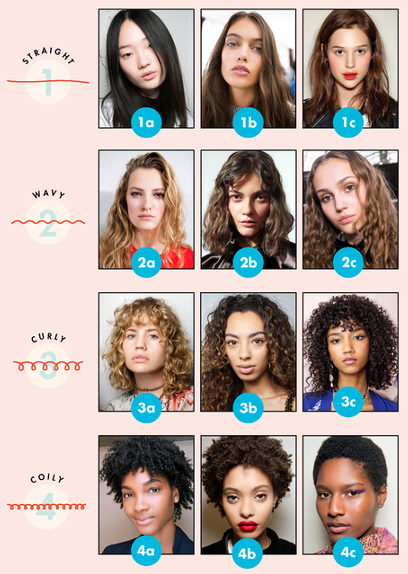
Hair is often classified into two main categories: hair type and hair curl pattern. The type number (1, 2, 3, 4) indicates how your hair naturally grows from the follicle on your scalp when it is wet. This can be straight, wavy, curly, or coily in appearance. Each individual wave, curl, or coil’s thickness and width are further described by the letter (A, B, C). It is also common for people to have a combination of different hair textures and types across their heads, creating unique and varied patterns.
-
This hair type has no natural curls and will have a tendency to become oily. Check the label of your products to be sure that you not adding any extra oil to your hair, unless it is a very light oil for the ends to retain moisture (moroccan oil ultra light spray oil and K18 oil are two great ones. Also recommended, that you don’t use heavy serums or butters.
Type 1A: Straight hair that has no curl or wave, its hard for them to even curl hair.
Type 1B: Straight hair but when left unsettled it is generally straight but can hold curls.
Type 1C: Often causes frizziness depending on the climate or environment. This hair type tends to be thick and coarse.
It’s also important that you don’t wash your hair too much as you’re causing your scalp to overproduce oils, so maybe give dry shampoo a try between washes!
-
Wavy hair, or type 2 hair, is a versatile hair texture that falls between straight and curly, characterized by an "S" shaped bend. It is often fine to coarse, prone to frizz and tangling, and can be easily weighed down. I Love mousses and light gels for this texture (AG Mousse gel or Foam, and AG Liquid Effects gel) and lighter conditioning products to maintain volume without frizz.
Type 2A: Your hair from the roots is fairly straight and the ends are loose waves. You should avoid of oil based or creamy products. I recommend that you use a light mousse or use a spray gel that will define the waves.
Type 2B: Your hair requires a little more effort to straighten. Its defined S-shaped waves starting from the mid-length. To enhance your natural waves, use a sea salt hairspray or light cream styler (AG Sea Spray, Beach Waves, or Details)
Type 2C: Often thicker and can be prone to frizz in damp weather. I recommend using a medium weight cream or mousse for styling this texture, like AG’s Recoil cream or Mousse gel.
-
Curly hair is defined by its, oval or bean-shaped follicles, resulting in strands that grow in spirals, coils, or loop patterns. It is characterized by its high volume, tendency to frizz, and susceptibility to dryness, as scalp oils struggle to travel down the curved shaft.
Type 3A: You have big, loose curls.
Type 3B: The curls will vary from ringlets to corkscrews. I recommended using a medium weight styling cream or milk for less frizz but more definition, and or a gel.
Type 3C: Hair tends to experience the most volume and fizziness can be an issue with this type of hair. Its best recommended to use a sulfate-free, creamy cleanser, so not to dry out your hair, and a heavier styling product like a cream or custard.
-
Coily hair, often called Type 4 hair, is characterized by very tight, small, and dense curls or "Z"-shaped zig-zag patterns that start directly from the scalp. Known for having the most volume and highest shrinkage (up to 50-100%) of all hair types, it is very delicate, prone to dryness, and requires consistent moisture.
Type 4A: Has a dense spring, its important to use a leave-in moisturizer for adding more hydration to wash and go styling always.
Type 4B: This type of hair has 75% skrinkage and the best styling products are those that provide intense hydration, moisture retention, and definition without buildup. Key ingredients to look for include shea butter, coconut oil, argan oil, and humectants like honey.
Type 4C: It’s often quite dry because the natural oil, which is produced at your scalp has an indirect journey to the ends. You need to load up on hydration in the shower and then style with multiple creams and gels to provide that extra surge of moisture your pattern requires.
My Services
Now that you know more about your hair type and texture let’s get you booked for your first visit Haircut appointment. I cant wait to help you discover the beauty in your hair!